LINK TO PDF NEWSLETTER DOWNLOAD

September 2025

Saturday OCTOBER 4, 2025 10:00AM – 5:00PM


Door prizes from many of our suppliers:


CHECK OUT OUR UPCOMING SPEAKER SERIES LATER IN THE NEWSLETTER.


HOME DELIVERY SCHEDULE FOR MONTH OF September 2025
Thursday September 4, and Thursday September 18, 2025

The American crow is the only bird that dares to attack an eagle, but the eagle never fights back. Here is why:
1. The crow is the only bird bold enough to sit on the eagle’s back and peck at its neck. Relentless. Annoying. But the eagle….stays calm.
2. The eagle doesn’t flap. Doesn’t fight. Doesn’t waste energy. It does only one thing: it rises.
3. The higher the eagle soars, the thinner the air becomes. The crow? It can’t handle the altitude.
4. Eventually, the crow gasps. Loses strength….and falls off. Not because the eagle attacked, but because the eagle ascended.
American crows are a familiar sight across the country, common everywhere except our hottest and driest deserts. While crows in folklore and fiction are often associated with trickery and death (a group of crows is, after all, called a “murder”), recent research has shed new light on just how intelligent and family-oriented these birds can be. So throw out any pre-conceived notions you might have about crows, and get to know one of Canada’s cleverest birds a little better.

1. Crows might be associated with carrion, but the crafty corvids are opportunistic eaters who use their intelligence to eat just about anything—from crops to other birds’ eggs—they can get their beaks on. American crows have been seen digging pits to forage for clams, distracting river otters to steal fish, dropping nuts on hard surfaces to open them and stealing pet food from outdoor dog dishes.
2. Crows’ penchant for crop thieving in particular has made them some enemies over the years. (Scarecrows and other figures meant to frighten crop destroying bird go back centuries. In the 1930s, there was even a brief attempt to eat away at their numbers by popularizing them as a dinner item. A man in Tulsa, Oklahoma hosted a series of “crow banquets” to prove how tasty the birds were, and apparently impressed the governor of Oklahoma so much that he established a “Statehouse Crow Meat Lovers Association.” Luckily for the crows, however, eating crow never really caught on—the fad faded by the early 1940s.
3. Recent research has shown that crows are also known to hold “funerals” and “wakes.” When an American crow finds the dead body of another crow, it will call out to alert others in the area, who will gather and begin to make a ruckus themselves. Researchers think the behavior helps crow communities learn about potential threats, so they know which locations and predators to avoid in the future.
4. This communal learning is possible because crows are particularly social and family-oriented birds. American crows will form large flocks to forage at garbage dumps and farms during the day, and they roost in numbers ranging from hundreds to two million in the winter. They also form close family units of up to five generations. Yearlings and two-year olds will even give their parents a hand with chick-rearing, helping to build the nest, keeping it clean, and feeding their mother while she is sitting on the nest.
Why do we not see baby crows? You might not realize you’re looking at a baby crow since they are close to the same size as adult crows when we first see them. In addition, it’s not common to see hatchling crows because their nests are high up in trees where humans don’t generally hang out.

OUR UPCOMING SPEAKER SERIES!
LOCATION:


AMAZING AND COLOURFUL BIRDS OF BELIZE AND GUATEMALA
WEDNESDAY OCTOBER 1ST 6:00PM
TICKET PRICE: $20.00 + GST
(Tickets can be purchased through the Wild Bird Store website under resources – calendar.)
Tickets are non-refundable
www.wildbirdstore.ca

This presentation covers the amazing and colourful birds of Belize, with a brief excursion to birding in the nearby Mayan City of Tikal, in Guatemala, including photos taken on two trips in 2017 and 2020. Belize is a gentle introduction to tropical birding, with a variety of habitats, comfortable amenities, no language barrier, and many familiar species to North American birders.

LOCATION:
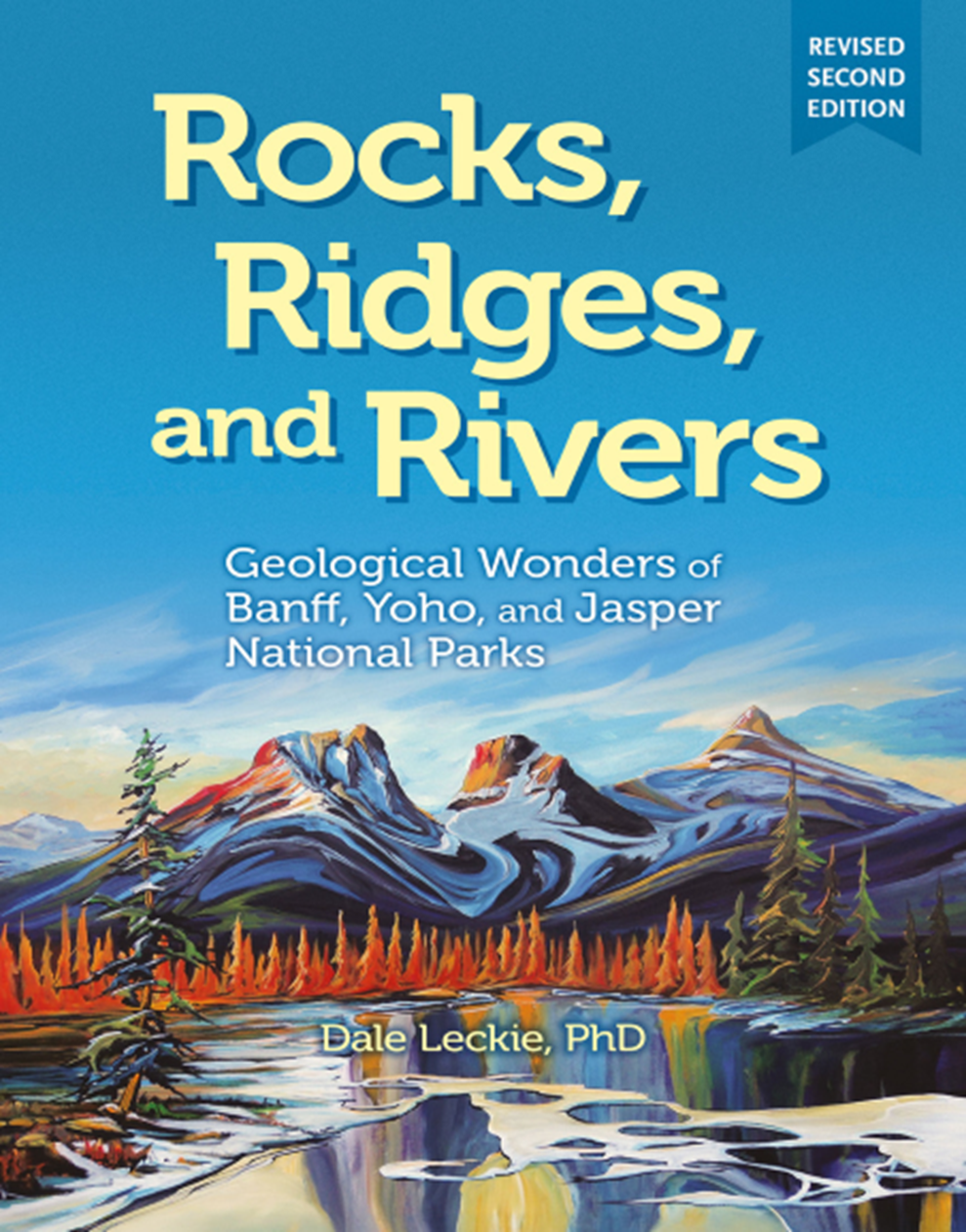
Scenic Wonders of Canada’s Mountain Parks – Exploring Banff, Yoho, and Jasper National Parks
WEDNESDAY OCTOBER 8TH 6:00PM
TICKET PRICE: $20.00 +GST
(Tickets can be purchased through the Wild Bird Store website under resources – calendar.)
Tickets are non-refundable
www.wildbirdstore.ca
Did you ever wonder how the spectacular Rocky Mountains came to be? Allow geologist Dale Leckie to guide you through one of Canada’s most amazing UNESCO World Heritage Sites—the Canadian Rocky Mountain Parks. Leckie tells the dramatic story of the Rockies, its rivers and valleys, glaciers and hot springs, caves and karst, mountain building, and erosion. This talk describes localities through Banff, Yoho and Jasper National Parks that travelers would be wise to seek. All the geological wonders can be seen from roadside pullouts or after short walks along well-maintained paths. With eye-catching illustrations and photographs, this talk blends storytelling with science, and natural beauty with easy-to-understand explanations. Dale will tell you what you need to know to experience and understand the geologic natural history of Canada’s Rocky Mountain Parks, where more than half a billion years of history waits to be discovered. He answers your questions about features that make the Rockies such a profound destination, including Lake Louise—what geological processes created its turquoise waters? Miette Hot Springs—what makes the water so hot? Emerald Lake—how did glaciation create this body of water? Athabasca Glacier—what does this glacier tell us about ancient climate?

LOCATION:
Calgary’s Best Walks & the Joy of Walking
WEDNESDAY OCTOBER 22ND 6:00PM
TICKET PRICE: $15.00 +GST
(Tickets can be purchased through the Wild Bird Store website under resources – calendar.)
Tickets are non-refundable
www.wildbirdstore.ca

LISTEN to Lori’s CBC Homestretch walk series with Jenny Howe (began July 7)
LISTEN to Lori’s 2025 interview on the CBC Eye Opener
READ Lori’s Calgary Herald “Ode to Walking” article
READ Lori’s Calgary Herald Walking Series
WATCH Lori show highlights from Calgary’s Best Walks (2025) on CTV Morning Live
Lori’s biography:
Lori Beattie the author of Calgary’s Best Walks, now in its 3rd edition, and Calgary’s Best Bike Rides, and writes and chats about walking, biking, hiking and connecting cities on foot and by bike in monthly articles in the Calgary Herald, her walk series on CBC Homestretch and many years as segment host on CTV Morning Live. She is also the owner and guide of Fit Frog Adventures where she leads year-round Calgary walks, hikes, and snowshoe days. She presents to groups on the pleasure of self-propelled urban exploration, being a tourist in your own city, building communities through walking, and making Calgary feel like home, one step, or pedal, at a time.

LOCATION:
Costa Rica:
An introduction to a neotropical birding paradise
WEDNESDAY, NOVEMBER 5TH 6:00PM
Ticket price: $15.00 +GST
(Tickets can be purchased through the Wild Bird Store website under resources – calendar.)
Tickets are non-refundable
www.wildbirdstore.ca

Gavin McKinnon’s biography:
Gavin has had a passion for birding from a young age, which stems from a family trip to Point Pelee National Park on the northern shores of Lake Erie. Since then, Gavin has traveled extensively across Canada and the United States. He has also ventured farther afield and led tours in the Neotropics and Africa. After high school, Gavin attended Lethbridge College, where he studied Renewable Resource Management. Gavin enjoys sharing his knowledge and passion for birds, which led him to form his own company, Meadowlark Birding Tours, in 2022. Gavin lives in Calgary, enjoys birding locally, and is currently working on a new field guide to the birds of his home province of Alberta.


A NOTE FROM JIM…….
Dear fellow birders,
In 25 years or so of leading Wild Bird Store walks I’ve met a lot of wonderful folks! I’ve enjoyed every minute of it. The best part has been seeing the reactions of people experiencing a lifer or an interaction for the first time. Now I am finding increasingly difficult to walk longer distances so I will be discontinuing walks at the end of September. However I can still drive! So in late November I will schedule some car/day trips over the winter months to search for Snowys, buntings, larks, raptors and other cold weather critters.
Thank you all for being with me on the journey.


Jim St. Laurent
A NOTE TO JIM FROM THE BIRDSTORE:
The Wild Bird Store would like to thank Jim for his many years and many, many birdwalks that he has led for us. We wish Jim all the best as he transitions to a different format with us, and hope that he is able to lead many more birding tours over the next many years.
All participants on any bird walk must have purchased a ticket through our website – www.wildbirdstore.ca and present the ticket to Jim prior to the bird walk.
The weather plays a big part in bird walks and Jim reminds participants to dress anticipating weather changes and to carry water to keep hydrated.
Carburn Park:
Saturday September 6, 2025
9:00am meet at the parking lot for Carburn park. 67 Riverview Dr. SE
Ticket price: $7.00 + GST
Bebo Grove
Saturday September 20, 2025
9:00am meet at the parking lot for Bebo Grove 13610 24 St SW
Ticket price: $7.00 + GST


We offer a discount if you return your 20 LB or 40 LB seed bags so that we can re-use them (sorry—not the Mother Nature bags which we cannot re-use), suet ball containers, or if you bring your own container or bag to fill . This discount is in addition to any other discount offered.

THE GREAT MIGRATION GATHERING:
Going into September you will no doubt notice the gathering of Common grackles, European starlings, Brown cowbirds and sometimes a few Red-winged blackbirds mixed in for good measure. They gather in huge numbers to prepare for the migration south for the winter and of course, being a long and strenuous journey, they need to bulk up on food for energy. That is where you come in—you have been feeding the lovely backyard birds of summer, but all that is about to change. No other song bird will challenge these hoards for space to feed at your feeders. There unfortunately is only one solution—take your feeders down (good opportunity to clean and sanitize them for the winter months ahead.) And don’t worry about your lovely backyard birds—once the masses have left they will be back to enjoy your offerings. It happens every Fall!

Question:
I love to watch birds bathing, but I live where it can get pretty cold. What are your thoughts on electric bird bath heaters?
Response:
You know, birds do like bathing at all times of year and it is really fun to watch them do it—they truly seem to enjoy themselves. However, even birds have got to be careful under certain kinds of weather conditions, in particular exceptionally cold temperatures that are well below freezing. I have heard of cases of dead birds being found in a yard just after they had bathed in a neighbor’s bird bath warmed by a heater and the temperature suddenly dropped precipitously. And I will never forget my own experience with my captive Peregrine falcons in Montreal quite a number of years ago whereupon we impulsively decided to put out baths for them at the onset of winter. Most of the falcons immediately used them but suddenly we were faced with an overnight cold snap and we almost lost a number of those falcons to hypothermia. In other words, the birds seemed to have had no clue that the temperatures were going to drop precipitously. While some wildlife conservation organizations decree that heated bird baths are dangerous to birds and thus, should never be used, I believe that one has to use some common sense. If you are living in a region where the temperatures can suddenly drop to well below freezing in winter and you have a bird bath equipped with a heater, you should indeed pay attention to changing weather systems and consider covering your bird bath with a garbage bag with incoming cold weather. Alternatively, you can add some rocks to your bird bath so that there is not enough room to bathe in it, but still allow the birds to get a drink.
Birds do not need to bathe often, but they do need a drink now and then. Having said all that, perhaps the safest thing to do in regions experiencing cold weather in winter is to simply shut the bird bath down for the season. Birds that do not migrate but remain in Canada for the winter are usually able to find a water source for drinking somewhere, including ingesting snow. However, melting the latter with one’s body heat does involve using energy and thus, it is not a preferred source of water

David M. Bird, Ph.D., Emeritus Professor of Wildlife Biology, McGill University www.askprofessorbird.com

David M. Bird is Emeritus Professor of Wildlife Biology and the former Director of the Avian Science and Conservation Centre at McGill University. As a past-president of the Society of Canadian Ornithologists, a former board member with Birds Canada, a Fellow of both the American Ornithological Society and the International Ornithological Union, he has received several awards for his conservation and public education efforts. Dr. Bird is a regular columnist on birds for Bird Watcher’s Digest and Canadian Wildlife magazines and is the author of several books and over 200 peer-reviewed scientific publications. He is the consultant editor for multiple editions of DK Canada’s Birds of Canada, Birds of Eastern Canada, Birds of Western Canada, and Pocket Birds of Canada. To know more about him, visit www.askprofessorbird.com or email david.bird@mcgill.ca.


Waterton Lakes National Park
The Waterton Wildlife Weekend is an annual event held in Waterton Lakes National Park in southwestern Alberta, celebrating the park’s diverse wildlife. While the specific dates for 2025 haven’t been announced, the event typically takes place in mid-September. It’s a collaboration between the Waterton Park Community Association and Parks Canada. The weekend focuses on activities related to the park’s over 250 birds species, 60 mammal species, 24 fish species, 10 reptile and amphibian species, and thousands of invertebrate species.
For more information and dates of this event, please google:
Waterton lake national park wildlife weekend 2025

The search continues for the elusive Common nightjar. I must admit we are not early to rise birders, but during the summer we do tend to stay out as long as there is light. Kris has added another bird to our hunt—Pygmy owl. Definitely a challenge, a tiny owl (only 6 inches) who tends to be on the ground in fields or in trees. Not an easy find – we shall keep you posted as to our success as we head into Fall.
The Swainson’s hawk was prevalent throughout our trips, but the Eastern kingbird did it’s very best to offer a challenge.
Thanks to one of the Wild Bird Store’s customers, we were once again able to find the Bobolink and he never disappointed to be at that location when we ventured out to see him.
As I have noted before, it’s not just about birds when we go out on our birding trips. All nature seems to fascinate us including the host of beautiful flora throughout the summer, and sometimes a surprise we had not expected. Like a badger running across the road, or while looking at some Alpacas a red fox trying his best not to be seen. But the funniest thing we saw this summer was a total surprise! Driving down a dirt road (we always try to avoid paved roads) Kris slammed on the brakes and we did what we call “backwards birding” which in this case had nothing to do with birds. Kris had seen something out of the ordinary in a canola field. It wasn’t moving and a conversation insued as to what it might be—a real moose (not where you would ever expect to see a moose) or some farmer’s idea of a joke—a statue of a moose.
Then Kris saw an ear twitch and sure enough it was a moose in the middle of this huge yellow field. Out comes google and sure enough we found out moose love canola (sometimes even flax fields). Well that was certainly an eye opener for us both. Every canola field we encountered thereafter Kris would ask if I saw a moose. Never did and may never see another one, but we will keep looking. Animals and birds do the strangest things.
Another strange observation—this time it was immature Swainson hawks. As big as the parents we saw several on the road and they didn’t care about us or the car. Kris finally determined they were eating bugs off the road—now I know that is not how their parents taught them to hunt for food, but after all a meal is a meal, right?
We have enjoyed a wonderful summer of birding and also seeing the sights of this glorious province. But just because summer is at an end and migration south will start again soon, the birds that make Alberta their home all year round will continue to give us joy every time we venture out. We encourage you to do the same—
HAPPY BIRDING!


Coutts Centre
FOR WESTERN CANADIAN HERITAGE
Launched in June 2011 thanks to a generous gift from the late Dr. Jim Coutts. The Coutts Centre for Western Canadian Heritage preserves and celebrates the diverse heritage that is central to the spirit of the west, honouring both its namesake and the land he so admired.
Just east of Nanton, Alberta, the Coutts Centre is comprised of a quarter section of land on the more than 100-year-old property that once belonged to Jim’s grandfather. The quarter section of land includes the original homestead, extensive gardens and restored buildings.
This unique property is a living testament to Jim’s family history and his own legacy as a community-driven Albertan. The Centre supports community involvement with artist residencies, festivals, weekend brunches and live music, and encourages community use through rentals and event bookings.


The Coutts Centre for Western Canadian Heritage and where Jim Coutts’ homestead is situated is on the traditional territories of the Blackfoot; the Siksika, Piikuni, Kainai, Tsuu T’ina and the Stoney Nakoda First Nations and the peoples of Metis Region 3.
We are living and benefitting from Blackfoot Confederacy and acknowledge the peoples who have cared for this land since time immemorial. Together we are all treaty people and recognize that there is much to repair toward reconciliation .
We at Coutts Centre work to respect indigenous traditions of land protection along with showcasing the settler history who homesteaded on these prairies.


If you are unable to make it in to the store on Tuesday for Senior’s Day Discount, then you can call the store anytime on Tuesday to place and pay for your order, and then you can pick it up later in the week at your convenience.
PLEASE NOTE: This is for customers who are currently signed up as a senior’s day customer and applies only to in-store purchases.
DONATIONS
Located at The Wild Bird Store (near the seed bins). We collect your cash as well as “wishlist” donations and arrange to deliver them to local wildlife organizations including Calgary Wildlife Rehabilitation, Alberta Institute of Conservation and Ellis Bird Farm.
We ask for your support quarterly for each of these organizations.
For September, October, and November 2025 your donations will go to:

Thank you for your support


It was known as simply the Sage grouse until the Gunnison sage-grouse was recognized as a separate species in 2000.
They migrate more like big game species than other bird species. Like elk or deer, they move in the tens of miles as opposed to the thousands of miles travelled seasonally by songbirds or waterfowl.
They eat 100% sagebrush leaves in the winter.


Wildwood Community Centre (4411 Spruce Drive SW): Every Tuesday 3:00pm to 6:00pm until the end of September. Through the winter months we will be on location the First Tuesday of the month.
Thank you for your continued support.
Look for the Broxburn Vegetable truck in the lot with us!
Crowfoot Arena (corner of John Laurie & Nosehill Drive NW: Every Wednesday 2:00pm to 5:30pm
Please place orders by 12:00 noon the day before the truck is on location
Text us @ (403)701-4571 OR email us at orders@wildbirdstore.ca
Earn and redeem customer loyalty points on the Mobile Seed Truck

DELIVERY: Deliveries will still be made on Thursdays ONLY. Please phone the store at (403) 640-2632 any day prior to 12:00 noon on the Wednesday before your delivery; place and pay for your delivery. Please phone with your order as early as possible to avoid disappointment. If you have any special instructions please do not forget to inform us when you place your order.
THE DELIVERY CHARGE WILL BE $10
MINIMUM ORDER FOR DELIVERY $25.

Have you checked out the Merlin app? Would you like a demonstration on how they will help you to identify birds? Stop by The Wild Bird Store during regular business hours and staff will be happy to show you how the app will enable you to identify birds in various ways.
Identify Bird Songs and Calls
Identify Birds by your Photos
Save Birds to Your Life List
Explore lists of birds near your location


Options for shopping at the Wild Bird Store


HOME DELIVERY SCHEDULE FOR MONTH OF September 2025
Thursday September 4 and Thursday September 18, 2025
THE DELIVERY CHARGE WILL BE $10. MINIMUM $25 ORDER FOR DELIVERY.
Store hours are:
10:00am to 5:00pm Tuesday through Saturday
We offer a discount if you return your 20 LB or 40 LB seed bags so that we can re-use them (sorry—not the Mother Nature bags which we cannot re-use), suet ball containers, or if you bring your own container or bag to fill . This discount is in addition to any other discount offered.


Write a Google review on your experience at The Wild Bird Store, and as a thank you, we will give you 100 customer loyalty points ($5.00 value). To get a promo code, kindly email info@wildbirdstore.ca
(one Google review per customer)
Earn 200 customer loyalty points ($10.00 value) by referring a friend, acquaintance or fellow birder.
Please visit the store to get a promo code.


No need for a card, just give your phone number. You earn $1.00 for every $20.00 spent (excludes “sales” items, books & optics) and can be used in-store and on Mobile Seed Truck. As a loyalty member our monthly promotions and in-store “specials” are automatically given at the cash register.
Combining our Seniors 10% discount with the Loyalty Program. (Excludes “sales” items, books & optics).


Discount for membership 10% discount for members of Fish Creek Park, AIWC, Priddis Golf Club, Nature Calgary, Sandy Cross Conservation, Springbank Garden Club and Millarville Horticultural Society. Must present valid membership card at time of purchase.
Discount for Military Members & Veterans 10% discount on
purchases in-store or on Mobile Seed Truck (sorry—excludes “sales”
items, books, optics and consignment items)

Does your Aspects or Squirrel Buster feeder need some replacement parts?


Is the warranty & repair depot for:
Squirrel Buster® Bird Feeders
Aspects® Feeders

Did you know that we can repair/replace parts and make it look like brand new?

We are closed
Monday September 1, 2025

5901 3rd Street S.E.,
Calgary, AB T2H 1K3
email: info@wildbirdstore.ca
(403) 640 2632
The Store is open Tuesday through Saturday 10:00am to 5:00pm
We are CLOSED Sundays, Mondays and ALL Statutory holidays for Faith, Family and Friends.
We still offer curbside pickup every day we are open and delivery service on every other Thursday.
FOLLOW US ON:
Facebook @thewildbirdstoreyyc
Twitter @wildbirdstoreyyc
Go to YouTube, type in the search bar “The Wild Bird Store” to watch our videos and to help us become more visible . Be sure to click on “Subscribe” before you leave the page.